Do you want fries with your AI model?
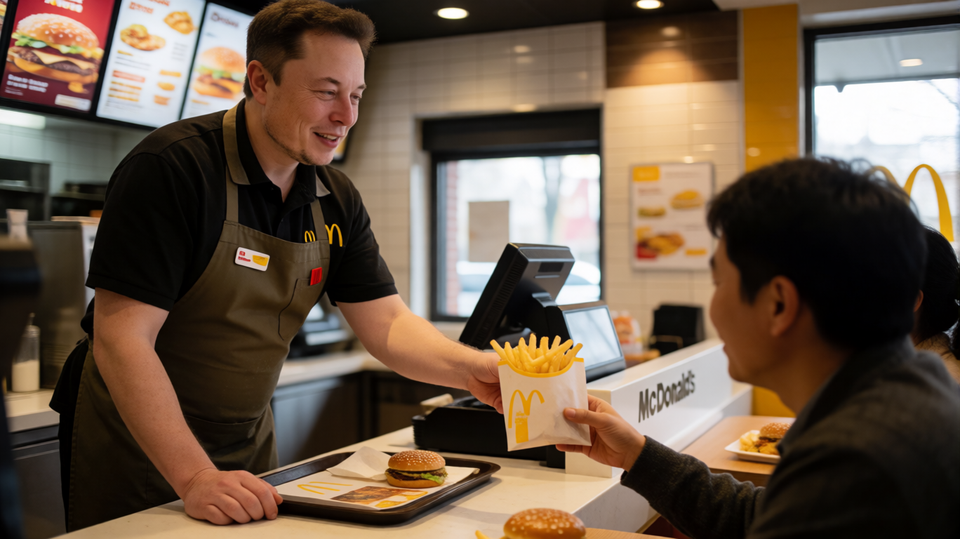
Will this be Elon in 12 months? What will happen when SpaceX is actually priced at its value rather than on hype?
Making predictions is a mug’s game, but the more I look into AI agents, the more I see that value is moving toward the "harness"—the tools and infrastructure surrounding the models—rather than the raw models themselves.
Just as a fast-food giant succeeds because of its massive logistics and systems (the harness) rather than just the ingredients, an AI agent like Hermes provides significantly more value than a standalone model.
Someone recently asked me what the difference was between an AI model and an AI agent, and I struggled to give a concise answer at first. But it comes down to this:
Even "frontier" models (Claude, GPT, and Grok) are often wrapped in their own specialized harnesses. When you ask one of these models, "What happened in Hastings in 1066?" there is usually layers of "memory," session context, and system-prompting hidden behind the scenes to help the AI provide a better response. In specific cases—like if the person asking lives in Hastings, Minnesota—this can vastly improve the utility of the answer.
The "harness" is also the logic that calls external tools and injects your specific code or emails into the prompt before it ever reaches the model.
Currently, big US AI companies are borrowing massive amounts of capital to build data centres with specialized hardware to support larger models. However, in my experience, a huge portion of the real-world value comes from better software "harnesses" using these models rather than just making the models themselves bigger. These harnesses can even run on your own internal servers; they don't require cloud-scale infrastructure, and they certainly don't need the massive GPU capacity of dedicated data centres.